
The Welney Website
Aircraft crashes in Welney in WW2
page created 31st July 2010, amended/updated Saturday, 18 September 2010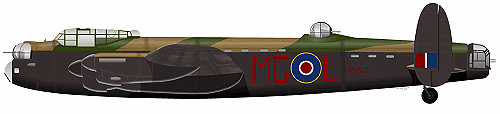
RAF Stirling coded MG-L
s/no P8623, "L Love", of 56 Sqn
Bomber Command.
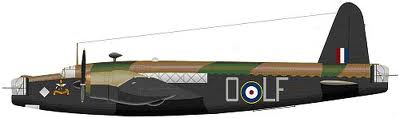
RAF Wellington coded O-LF
"O Orange" of 37 Sqn
Bomber Command.

USAAF P51B Mustang coded QP-N
"N Nuts (?)" of 334th Fighter Sqn
4th Fighter Grp, 8th Air Force
(under RAF control)
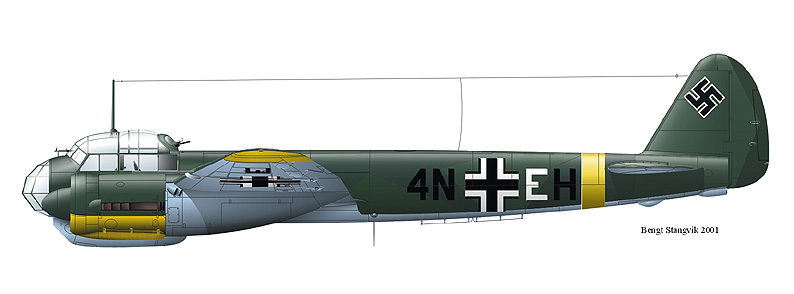
Luftwaffe Ju88 coded 4N+EH
"E Emil" of 1. Staffel (H)
Aufklärungsgruppe 22 (4N)
| date | make | type | code & s/no | force | crash-site |
| 10th Feb 1941 | Vickers | Wellington Mk. 1C | R-LN T2888 |
British | Stags Holt |
| 2nd May 1941 | Junkers | JU88 A-5 | 3Z+CL 4269 |
German | Welney Washes |
| 13th Jun 1942 | Hawker | Typhoon Mk.1b | not recorded | British | Butchers Hill Farm |
| 24th Nov1943 | Avro | Lancaster Mk.111 | MG-J2 JA971 |
British | Welney Washes |
| 25th Apr 1944 | Handley-Page | Halifax Mk.111 | MP-L LK789 |
British | Colony Farm |
| 22nd June 1945 | NAA | Mustang P51B | E9*B (R?) 2-106-638 |
American | Hilgay |
Aircraft identity codes during WW2:
RAF aircraft had a 3-letter code painted each side of the fuselage, 2 letters indicating the squadron, the other the individual aircraft, the two parts separated by the RAF roundel (which had an extra yellow outer ring).
These codes were also used by the RCAF, SAAF, RNZAF, and for a while after America joined in the war, to USAAF units of the 8th and 9th AF. Later, the USAAF codes changed to a completely different system as the number of craft and units increased.
The single letter also indicated it's call sign, which would have been a name or word from the phonetic alphabet of the time - in the table above, the Wellington was called "R - Robert". Phonetic alphabets varied, there was no standardisation in those days, see link on right.
Very occasionally the single letter would have been followed by a single-digit number, painted much smaller than the letters. It indicated an additional or replacement aircraft. Sometimes the aircraft serial number was shown, also very small (see MG-L on left).
German aircraft had 3 letters and one number - see link on right for details.
The usual convention when recording codes is to use a minus sign to indicate the RAF roundel or US Star, and a plus sign to represent the Luftwaffe cross.
Codes could be changed or re-allocated.
|
In the 1969 film 'Battle of Britain' the producers insisted that the aircraft should look as authentic as possible. The exception was the code marks. They realised it would be impossible to portray every unit that took part in hostilities and it was decided to use fictitious code letters for the RAF aircraft, thereby apportioning no glory or blame to any particular RAF squadron. |
| Related pages on this website |
| Related pages on other websites |
| East Anglian Aircraft Research Group |
| Lost Bombers (searchable database) |
| RAF bomber command codes |
| German aircraft code marks |
| mixed codes |
| Phonetic alphabets |
| Airfields/Aviation Memorials photos |